
Knowledge Base 〉 Featured Articles 〉 Tips on Handling Chemicals with IBC Totes and Dispensing Stands
In many industries today, safely and efficiently handling and dispensing chemicals is key to both getting the job done and keeping workers safe. Intermediate bulk containers, commonly known as IBC totes, are a great option for managing chemicals when paired with proper stands and dispensing stations. Here are some helpful tips to make the most of these setups.
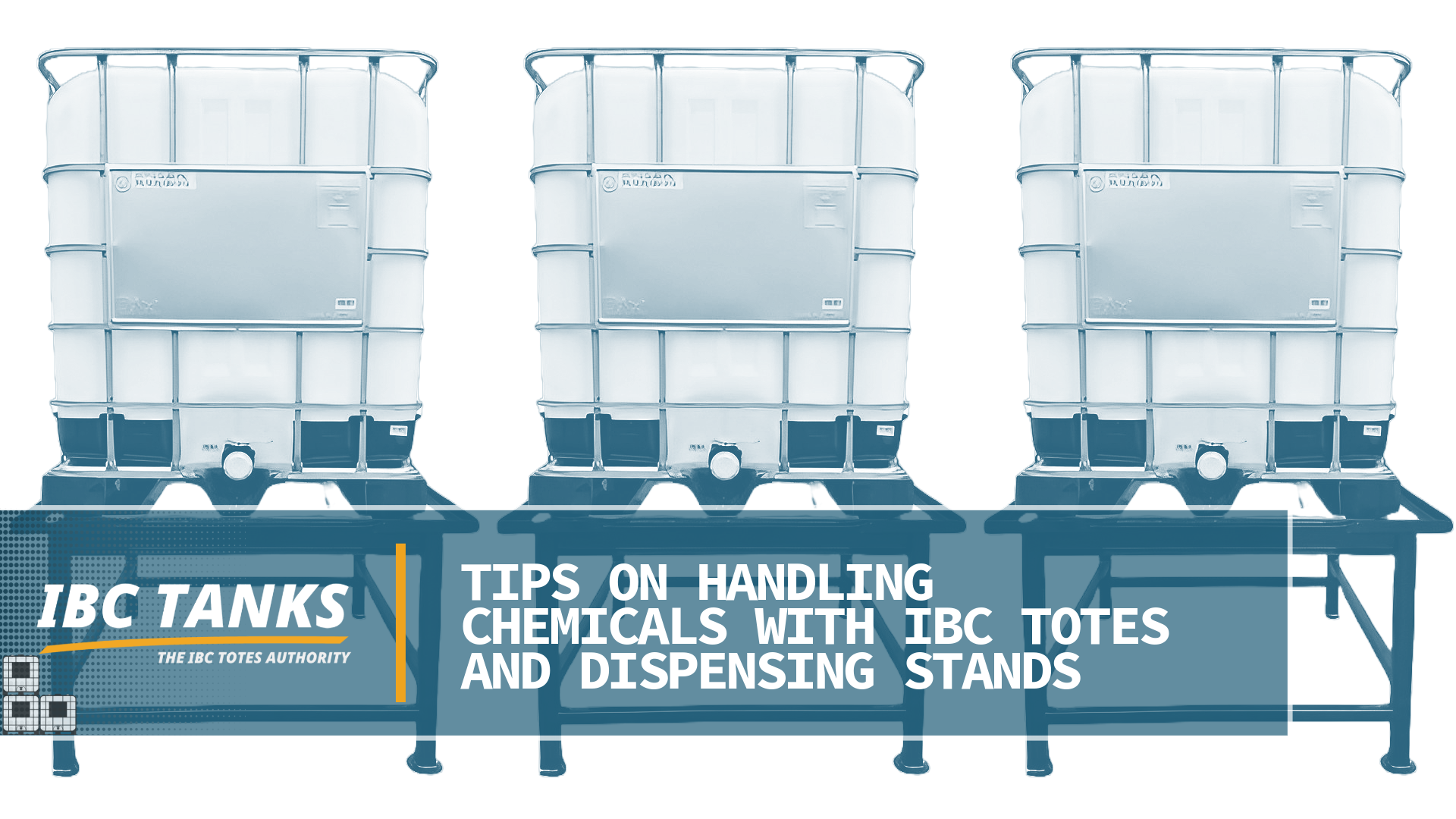

Secure and Stable Setup
To keep things safe and efficient, start by placing your IBC tote on a strong, stable stand. A stand made specifically for IBC totes can hold the weight of a full container and will help prevent accidents like tipping or wobbling.
Make sure to set the stand on a flat, even surface and away from high traffic areas, particularly forklift routes, to avoid accidents. Proper setup and placement will ensure stability and make the IBC easier to use and access what’s inside.
Use Appropriate Dispensing Equipment
It’s important to use the right tools when working with chemicals to make sure you’re handling them safely and accurately. For your IBC tote, set up a dispensing station with equipment like pumps, valves, hoses, and nozzles that are made to work with the specific chemicals you’re using.

Automated or powered dispensing systems make the process more accurate and efficient, helping to prevent spills or over-dispensing. Before starting any dispensing operation, double-check that everything is connected properly and there are no leaks.

Personal Protective Equipment (PPE)
Safety is paramount when dealing with chemicals. Always use personal protective equipment (PPE) such as gloves, goggles, face shields, and chemical-resistant aprons appropriate for the application. This equipment can help keep workers safe from dangerous substances, lowering the chance of chemical burns, breathing in fumes, or other injuries.
Keep emergency equipment like eyewash stations and spill kits accessible and near the dispensing area. Train workers regularly on how to use and take care of their PPE and how to respond to emergencies to ensure ongoing safety compliance.
Spill Basins and Secondary Containment
Even with care, precision, proper procedures, and additional equipment, spills and leaks from chemical IBC totes can still occur. Chemical releases are potentially hazardous and damaging and can cause delays in normal operations, making prevention or mitigation ideal.
This is where dedicated IBC tote containment tanks come in. These products are specifically designed for use with IBC containers and provide an open top tank to capture any leaks resulting from regular use.
In the event of an IBC catastrophic failure, the secondary containment tank has sufficient volume to capture the spilt IBC contents, preventing its release into the work environment. This design and setup allows any chemical release to be safely and easily cleaned up.
Regularly inspect the containment measures to ensure they are in good condition and replace them if necessary. Having a clear spill response plan in place allows workers to act quickly and effectively in case of an incident.

Follow Proper Mixing Procedures
When mixing chemicals, it’s essential to follow any manufacturer guidelines, blending protocols, and industry best practices on equipment and adding ingredients. Make sure to use the correct proportions of chemicals, water, and ingredients to achieve the desired results and avoid dangerous reactions.
Mixing directly in the IBC tote can streamline operations, save time, and reduce contamination risks. Make use of mixing equipment, such as agitators or stirrers, that are compatible with IBC totes and designed for the specific chemicals being mixed. This approach will help ensure consistency and uniformity in the mixture.
Ensure Proper Ventilation
Proper ventilation is vital when handling volatile chemicals, especially in enclosed spaces, which can be common in workplaces. Make sure the area where the chemicals are being used has plenty of airflow to prevent the buildup of dangerous fumes or vapors.
Use exhaust fans, fume hoods, or other ventilation systems to keep the air clean and safe for workers. Monitoring devices can also be used to help detect the presence of hazardous substances in the air, providing an extra layer of safety.
Regular Maintenance and Inspections
Regular maintenance and inspection of chemical IBC totes, stands, and dispensing stations is important to keep them safe and working well. Check for any signs of damage, corrosion, or wear around seals and connections, and fix problems quickly to avoid accidents.
Clean dispensing equipment regularly if different chemicals will be used to avoid cross-contamination and maintain optimal performance. Cleaning and rinsing IBC tanks between uses is often recommended, if not required, to prevent dilution or unwanted interactions. Keeping detailed maintenance records can help track the condition of the equipment and schedule timely replacements or repairs.
Takeaway
Using IBC tote stands and dispensing stations to dispense and handle chemicals can make workplaces significantly safer and more efficient. By following the tips outlined here, you can ensure a secure and effective setup, protect workers from potential hazards, and maintain high standards of operational excellence. For more information on IBC totes and their applications, visit our Knowledge Base.
